
What Is Enrollment Yield?
Enrollment yield is the percentage of admitted students who ultimately enroll at an institution.
For enrollment teams, improving yield is not simply about admitting more students. It is also about understanding which students are most likely to enroll, what influences their decisions, and where additional engagement may make a difference.
A student CRM can provide that insight by connecting recruitment activities, communications, applications, admissions, and enrollment outcomes.
What Can CRM Data Tell You?
A CRM can bring together information from many parts of the recruitment process.
For example, an enrollment team may be able to see:
- Where prospective students came from
- Which recruitment events they attended
- What communications they received
- How they interacted with the institution
- When they submitted an application
- Whether they were admitted
- Whether they ultimately enrolled
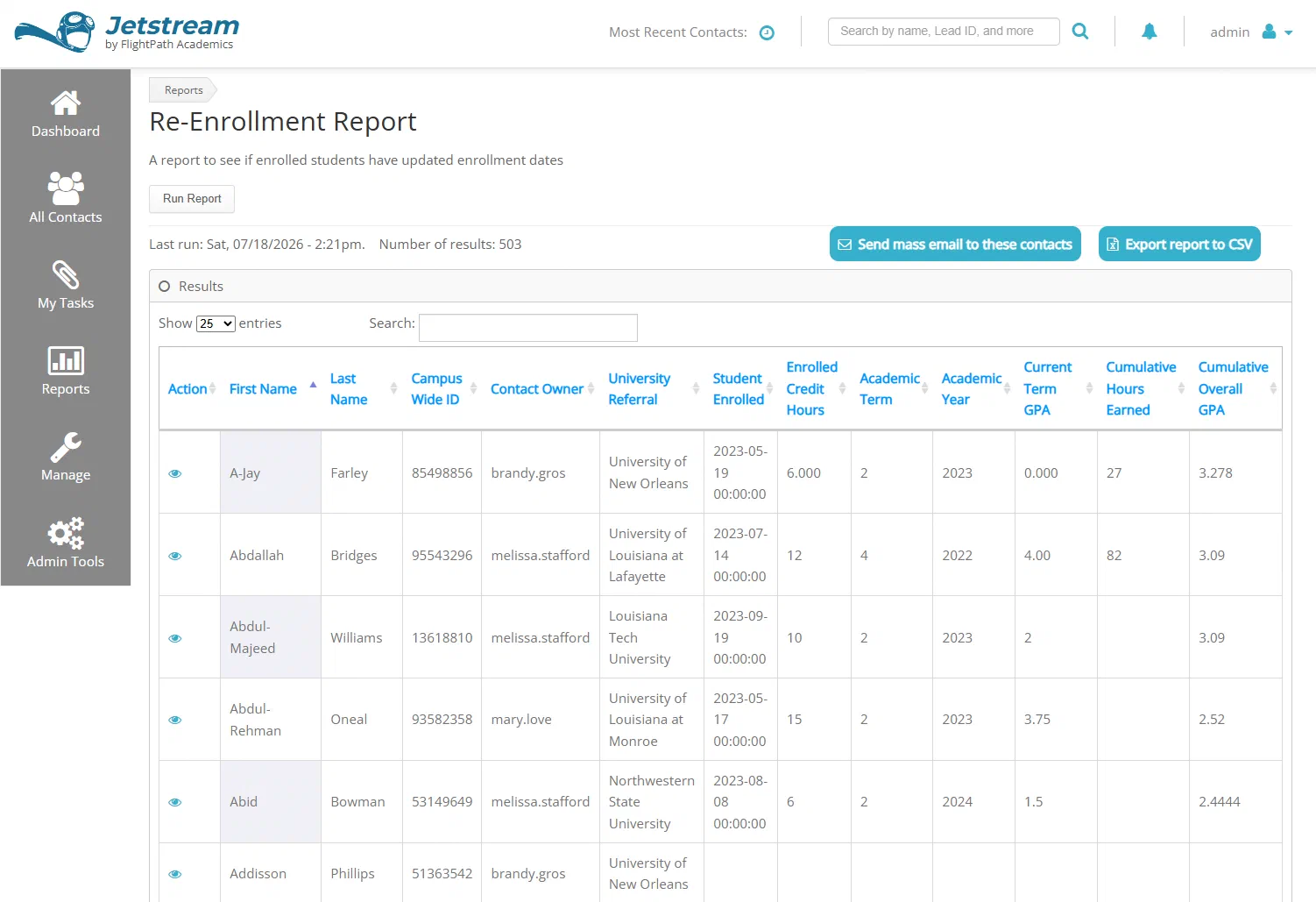
Looking at these activities together can reveal patterns that are difficult to see when information is spread across separate systems or spreadsheets.
A student recruitment CRM can make this kind of pipeline information easier to manage and analyze.
Identify What Is Working
Colleges invest time and money in campus visits, college fairs, information sessions, digital campaigns, email outreach, and other recruitment activities.
Generating inquiries is only part of the picture. CRM data can help enrollment teams look further down the funnel.
For example, a college might discover that one recruitment event generates fewer inquiries than another but produces a much higher percentage of applications and enrollments.
That information can help the institution decide where to focus its recruitment resources.
The most useful question is often not “How many students did this activity generate?” but “What happened to those students afterward?”
Find Opportunities for Follow-Up
CRM data can also help staff identify students who may need additional attention.
Consider a prospective student who has:
- Attended a campus visit
- Submitted an application
- Been admitted
- Not yet responded to recent communications
That student’s history provides more context than simply knowing that the student is admitted.
A CRM can help counselors and enrollment teams identify situations like this and determine what follow-up may be appropriate.
The goal is not to send every student the same message. It is to give staff enough information to make more informed and relevant decisions about engagement.
For more on maintaining communication after a student applies, see How CRM Software Can Keep Applicants Engaged After Applying.
Understand Where Students Stop Progressing
Yield is the final outcome of a much longer process. Students can stop progressing at many points. Some never respond to an initial communication, while others attend an event but never apply or apply but do not enroll after being admitted.
A CRM can help enrollment teams identify these points in the recruitment pipeline.
For example, an institution might discover that:
- Many students inquire but never apply
- Applicants from a particular source have a low admission yield
- Admitted students are not receiving timely follow-up
- Students who attend certain events are more likely to enroll
These patterns can point to areas where the recruitment process could be improved.
Turn CRM Data Into Action
Collecting data is only useful if enrollment teams can use it to make better decisions.
A useful CRM should make it easier to move from information to action. That might mean adjusting recruitment strategies, changing communication timing, investing more in effective events, or identifying students who need additional attention.
Reporting and pipeline visibility are therefore important considerations when evaluating student CRM software.
Better Data Starts With Connected Systems
CRM data is most useful when it reflects the student’s broader relationship with the institution.
A CRM may contain recruitment and engagement information, while an admissions system manages applications and an SIS maintains official student records. Connecting these systems allows enrollment teams to understand what happens across the student journey.
As we discuss in Higher Education CRM vs. SIS: What’s the Difference?, these systems serve different purposes but can work together to provide a more complete picture.
Using CRM Data to Improve Yield
CRM data cannot guarantee that more admitted students will enroll. Enrollment decisions are influenced by many factors that an institution cannot control.
What CRM data can do is help enrollment teams understand their recruitment process more clearly.
By connecting recruitment activities with applications, admissions, and enrollment outcomes, institutions can identify what is working, find opportunities for better follow-up, and make more informed decisions about where to focus their efforts.
Jetstream is a higher education CRM designed around the way colleges recruit and communicate with prospective students. Explore Jetstream’s features to see how Jetstream can help connect recruitment activity with the enrollment pipeline.