
What Is Student Recruitment Software?
Student recruitment software is an umbrella term for the technology colleges and universities use to attract, engage, and manage prospective students.
Recruiting students involves many different activities. A prospective student might request information, attend a campus visit, communicate with an admissions counselor, submit an application, and eventually enroll. Different software systems may support each part of that journey.
Some institutions use separate systems for these functions, while others use platforms that combine several capabilities. Understanding the role of each type of software can help colleges determine how their recruitment technology should fit together.
Student CRM Software
A student CRM is designed to help colleges manage relationships with prospective students.
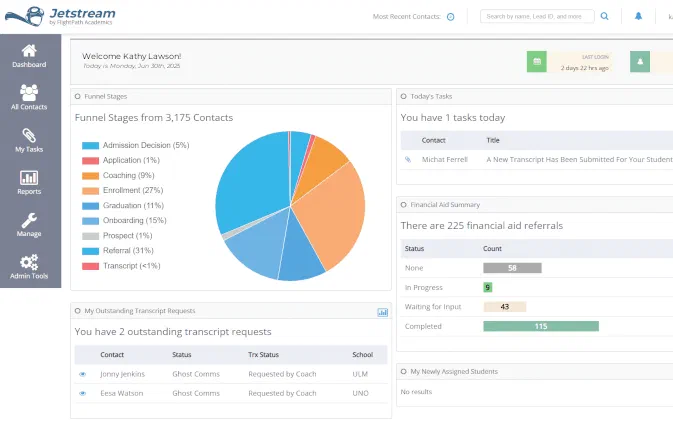
A CRM can maintain information about prospects and inquiries, track recruitment activities and communications, assign students to counselors, and provide a view of where students are in the recruitment process.
For example, a counselor might use a CRM to see that a prospective student requested information about a program, attended a campus event, and recently communicated with the admissions office. Having that information together gives the counselor useful context for the next interaction.
A CRM can also help recruitment teams manage larger numbers of prospective students without relying on spreadsheets or disconnected records.
If you’re interested in learning more, see our guide to student CRM software.
Recruitment Communication Software
Communication is another important part of student recruitment.
Colleges may use software to send email campaigns, follow up with prospective students, distribute information about programs, and communicate with groups of students based on their interests or activities.
For example, a college might communicate differently with a student who has requested information but has not yet visited campus than with a student who has already attended an information session.
Communication capabilities may be built directly into a CRM or provided through a separate marketing or email platform. Either way, these tools help recruitment teams provide useful information and maintain relationships with prospective students.
Event Management Software
Recruitment events are another important source of student engagement.
Colleges may host campus visits, college fairs, information sessions, open houses, and other activities throughout the year.
Event management software can help institutions handle registration, attendance, event communications, and other administrative tasks.
Connecting event activity with the student’s broader recruitment record can give counselors useful context for future communication. When event information remains isolated, staff may have to transfer it manually or look in multiple places to understand the student’s history.
Admissions and Application Software
Recruitment and admissions are closely related, but they are not exactly the same process.
Admissions and application software is generally focused on the application itself. It may handle application forms, required documents, application status, decisions, and other parts of the admissions process.
Recruitment software focuses more broadly on the relationship with the prospective student before and around the application. These systems can work together as a student moves from recruitment into the admissions process.
Keeping them connected can help prevent applicants from feeling like they are starting over once they move from recruitment into admissions. See how CRM software can keep applicants engaged after applying for more on maintaining that relationship after the application is submitted.
How These Systems Work Together
A college may use several different systems throughout the student recruitment and enrollment process. A prospective student might enter through a website form, become a contact in a CRM, register for a campus visit, receive communications, submit an application, and eventually become an enrolled student in the student information system (SIS).
Ideally, those systems should not operate as completely separate islands.
The SIS serves as the institution’s system of record for official student information, such as enrollment status, academic programs, courses, and grades. A CRM serves a different purpose, providing recruitment teams with information about prospective-student relationships and engagement.
When information can move between these systems, recruitment staff have a more complete picture of the student’s relationship with the institution. Integration can also reduce duplicate data entry and make it easier to maintain accurate information. Learn more about how a higher education CRM and SIS work together.
The specific technology environment varies from one institution to another. Some colleges may use specialized products for each function, while others may use platforms that combine several capabilities.
For a closer look at how a student recruitment CRM supports the enrollment pipeline, see Student Recruitment CRM: How Colleges Can Manage the Enrollment Pipeline.
Jetstream is a higher education CRM designed to help colleges manage prospective-student relationships, recruitment activities, communications, and the enrollment pipeline. Learn more about Jetstream or explore its features.